211 S Evergreen Ave B2, Woodbury, NJ

Where Sports Cars With Wide Tires Need Paint Protection Film
Tuesday, November 10, 2026
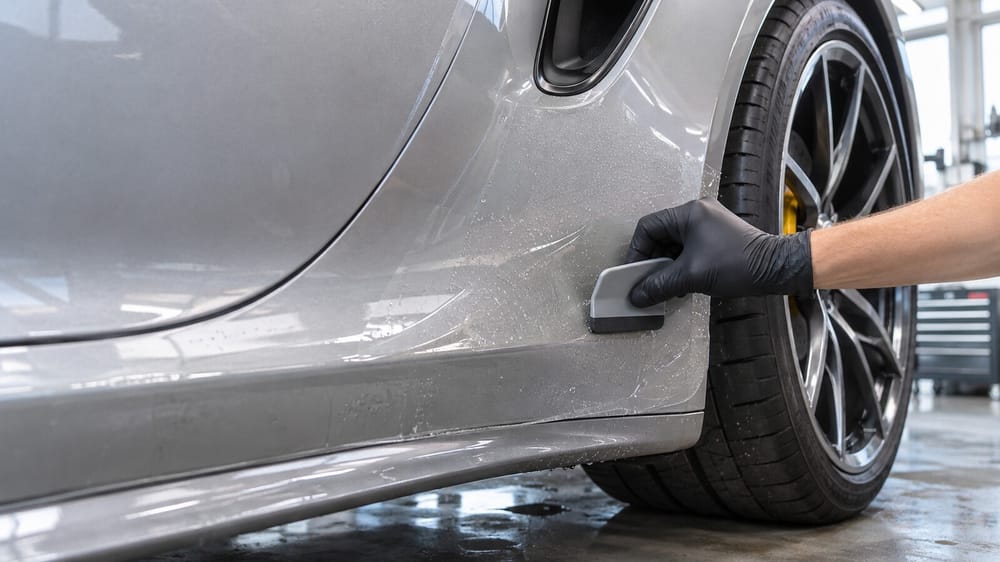
The nose of a sports car is an obvious place to protect from road debris. The side of the car can tell a different story. Take a look just behind the front wheels after a drive on a gritty road. You may find a fan-shaped spray pattern down the rocker panel, or specks low on the rear quarter where the body flares out. On cars with wide tires and pronounced fenders, those lower panels deserve a look when you plan paint protection film, or PPF.
The right coverage depends on how the wheels sit, how the body is shaped, and where the car actually goes. Two cars with the same tire width can throw debris onto different panels.
Follow the Path From the Front Tire
Start behind the front wheel and trace the painted area below the doors. On many cars, the rocker panel runs close to the road, where tire spray and grit can reach it. Next, look at the forward-facing section of the rear quarter, just ahead of the rear wheel. If that section bulges out into the path from the front tire, it can pick up the same kind of wear.
A dirty car can give you clues. After a normal drive, photograph the pattern before you wash it off. Mud and water marks are a starting point for the conversation, while the location of actual chips can help confirm which areas see repeated impacts. Check both sides, especially if your regular route involves a rough shoulder, gravel driveway, or road work.
Factor In Wheel and Tire Changes
Tell your installer if the car has wider tires, different wheel offsets, or spacers. The useful detail is where the outside of the tire sits relative to the body. A wheel that sits farther out can change which part of the car catches spray. Side skirts, flares, and other body changes can also affect where film is practical to install.
Bring photos of your wheel setup to Center City Vinyl and ask us to map the lower panels that make sense to protect.
Ask to See the Coverage Boundaries
The term “rocker coverage” can mean different things from one estimate to another. Ask the installer to point to the exact part of the painted sill included in the quote. If the rear quarter is exposed, ask whether a small impact patch or broader coverage makes more sense for its shape and the way the car is used.
Film boundaries are worth discussing on their own. A panel edge may provide a natural stopping point, while a smaller piece may end on an exposed section of paint. You should know where that line will land before installation, especially if a light-colored car already has a factory protection patch in that spot. Tell the installer about any existing film so they can assess how it fits into the plan.
Choose Coverage for the Miles You Actually Drive
A weekend coupe that spends time on back roads has a different routine from a daily driver crossing South Jersey on I-295. Consider where the car has already picked up chips, the roads you drive most, and which painted parts would be especially frustrating to repair.
If your wheel setup is still in the planning stage, bring the specifications or photos. Seeing the finished setup can help the installer make a more informed recommendation about where the coverage should begin and end.
Once those areas are identified, it is easier to decide whether to add the rockers, the rear-quarter impact zones, or both to the front-end coverage you were already considering.
Request a custom PPF coverage quote from Center City Vinyl in Woodbury, NJ, based on your car, your wheel setup, and where you drive.